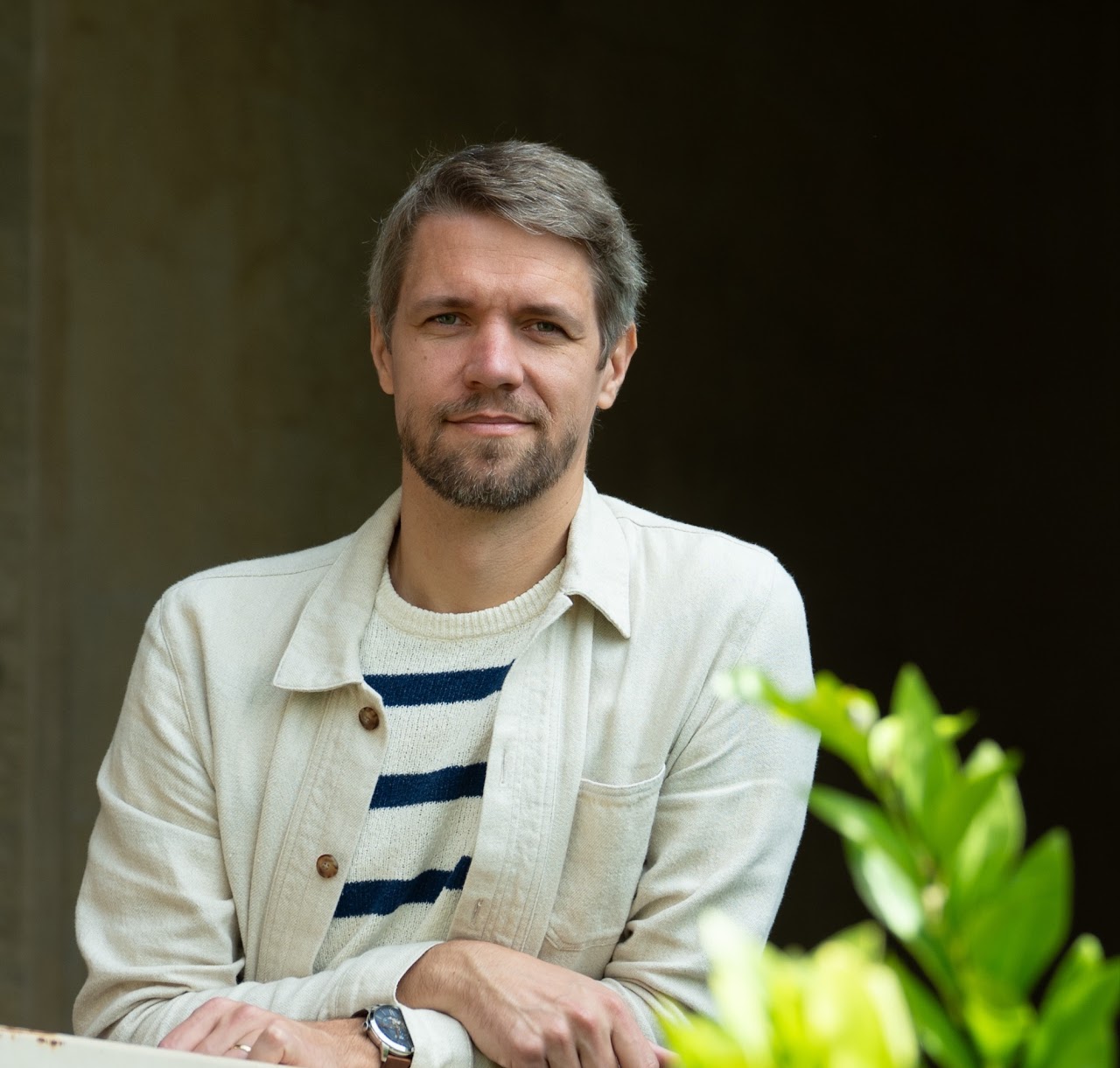
The linguist decoding whale speech with AI — and finding the same patterns inside our own brains.
Frontier scientist, surprising, demo-driven. Makes the room say wowa.
Gašper Beguš is an associate professor at UC Berkeley and linguistics lead for Project CETI, the effort to decode sperm whale communication. He trains models on raw, unlabeled audio — no transcripts, no annotations — building what he calls an artificial baby that learns speech the way infants do, and then he opens it up to see what it learned. The internal signals of these networks turn out to match human brainstem responses. And when he pointed the same interpretability tools at sperm whales, the model flagged spectral structure that biologists had not described. Follow-up work confirmed it: whale codas carry vowel-like units.
This matters beyond marine biology. The AI did not translate anything. It found a pattern humans had looked straight past for decades, and then told researchers where to look.
He'll be exploring what that means as a method. If interpretability can surface hidden structure in whale song, the same approach should work anywhere we have a lot of signal and not enough theory. If whales, what else?
You'll take away: a genuinely new use for AI, and one you can act on. A discovery instrument that points at structure in your own data that nobody has named yet. If you hold a messy dataset, this is the session that changes how you’ll think about what you can do with it.
ONE WATCH — "Scientists Listen to Sperm Whale Conversations and Discover the Use of Phonetic Alphabet" Territory. Graphics and a fun explanation!
Summit 2026
Thursday ·
8:00pm – 9:00pm
Panel
The Couch (main auditorium)
Whether humans and machines can ever converge on shared meaning, taken up by researchers who study how conventions form between people, between species, and now between agents.
Saturday ·
1:00pm – 1:45pm
Keynote (traditional)
The Couch (main auditorium)
Gašper shows his work on whale language, which was discovered using AI, and what that means for how we communicate with other minds.
Saturday ·
3:15pm – 4:15pm
Fireside duo
Three researchers on convention, communication and constraint, and what coordination costs when some of the participants are machines.