Helen Edwards on ABC Live Prime with Rebecca Jarvis: Should We Pause AI?
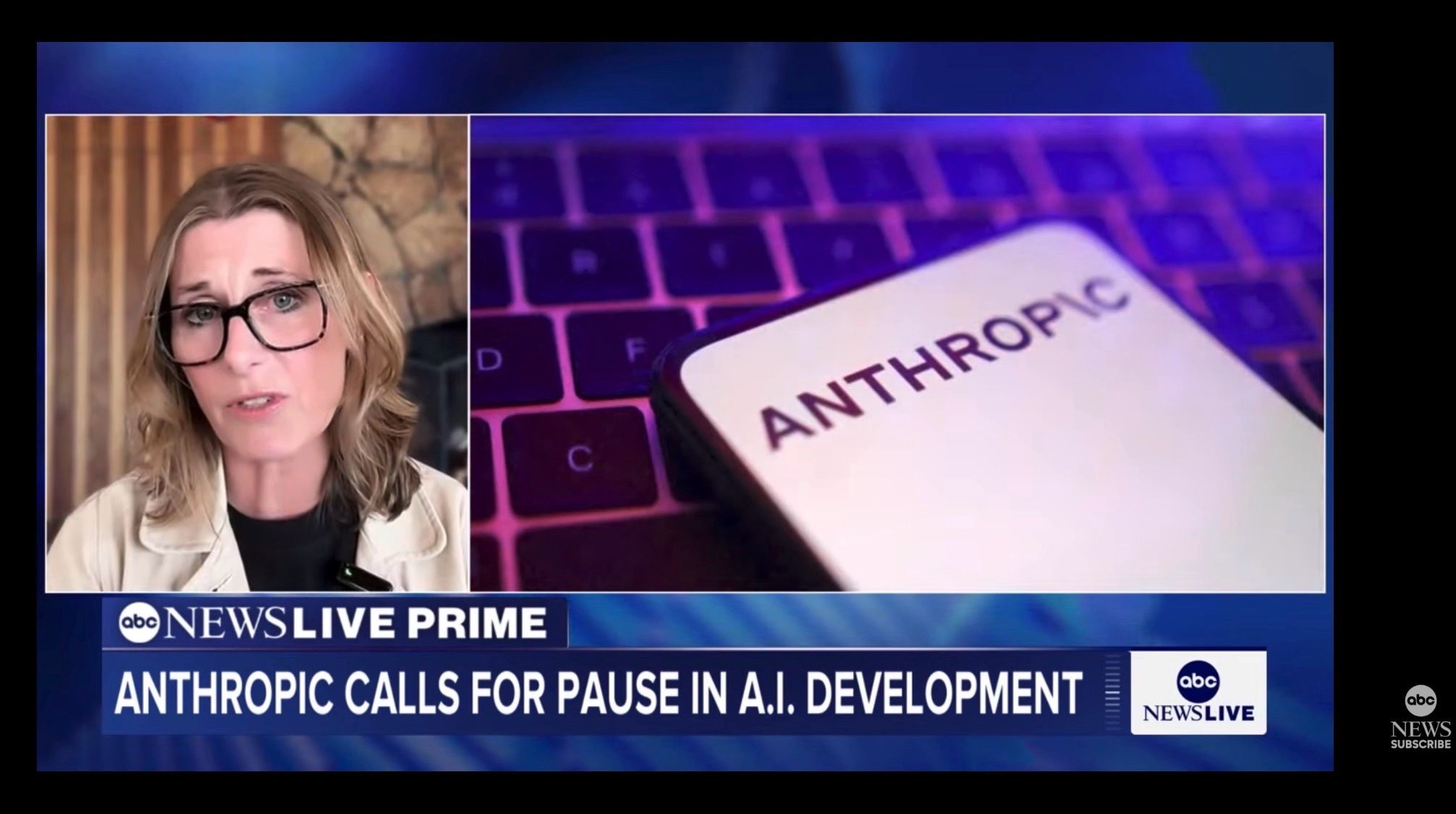
On June 5 2026 Helen Edwards joined Rebecca Jarvis on ABC News Live Prime to discuss a question gaining new urgency: should the world pause frontier AI development? Speaking from the annual meeting of UC Berkeley's Center for Human-Compatible AI, Helen offered a perspective that has shifted recently—not because the technology changed, but because the context did. When AI leaders can simultaneously claim "we have no choice but to continue" and "this is likely going to be really bad for most people," a pause at the frontier deserves serious consideration.
Could we collectively pump the brakes? Helen noted a practical reality: although enormous numbers of people around the world work on AI, the decisions that matter are concentrated among a small group who all know each other. It's not an exaggeration to say they could agree to a pause over dinner. So why haven't they? Because the incentives they operate under don't support it. The real question is what the rest of us can do to change those incentives.
Asked why an AI lab would raise alarms at a moment when trillions of dollars are on the line, Helen pointed to the rapid flip-flopping of the major labs: will AI cause mass unemployment or not? Is the next model amazing or too unsafe to deploy? Race ahead for profits, or pause along with everyone else? There's no steady, clear vision that makes sense to most people—and investors may need to ask whether they want to back companies that lack a clear vision for avoiding the dangers their own technologies represent.
The conversation closed on what's missing from the debate. Today's table seats those who want to ship products and those who want to slow or stop them. Absent are people with different ideas about what these products could be. Instead of building AI to replace humans—the dominant paradigm—what would it mean to build AI products for people? People want more meaningful work and deeper connections with others, and right now they see companies building the opposite. That's the work of the Artificiality Institute: understanding what makes AI good for people, and providing answers for how to build those products well. The path forward starts with each of us—noticing how we use AI, choosing consciously, and building the case for cognitive sovereignty over cognitive surrender.

