The Polyopportunity: Reframing Crisis as Possibility
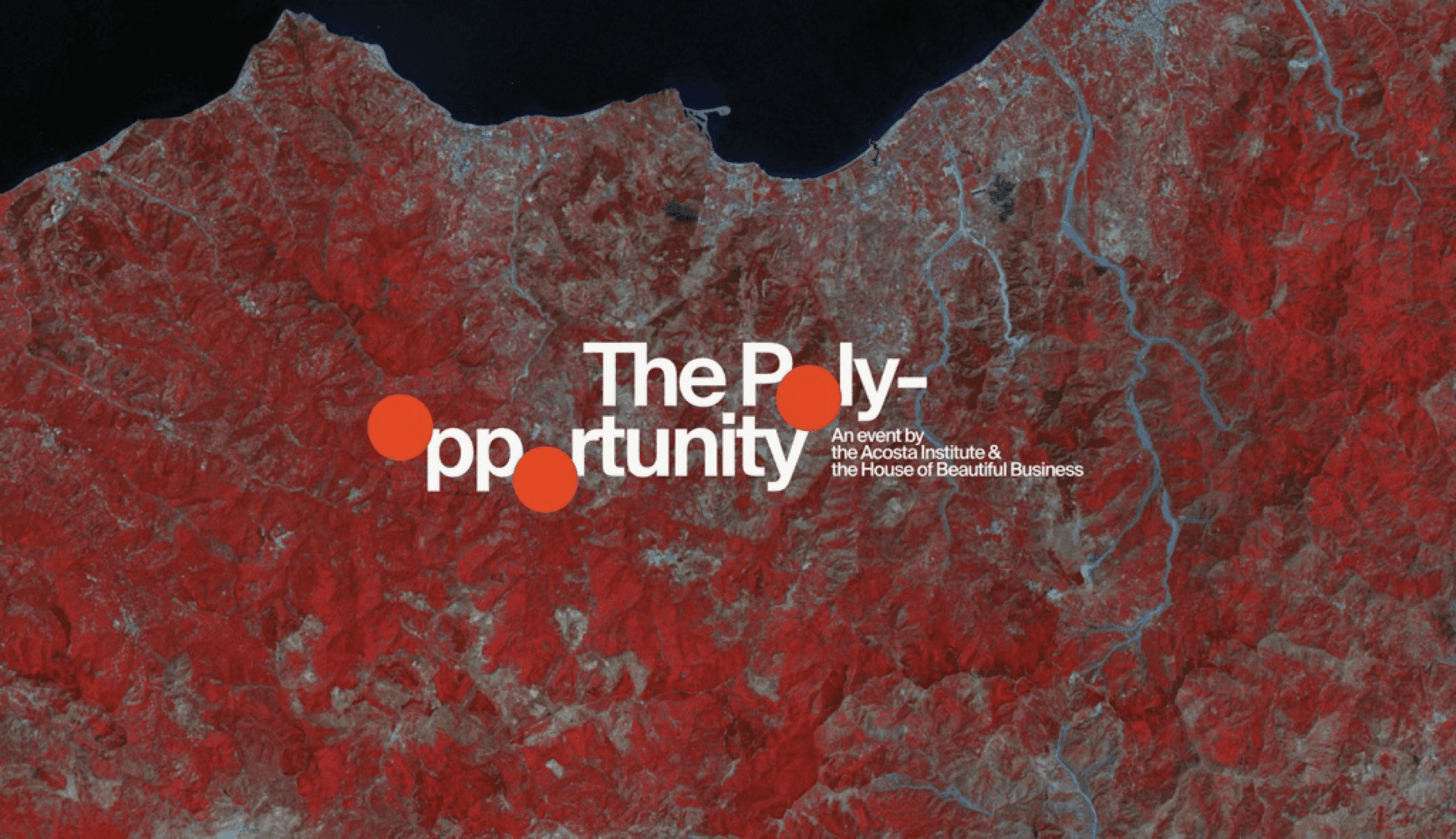
We joined the House of Beautiful Business and the Acosta Institute in New York during UN Week for The Polyopportunity—a gathering built around a provocation: What if the compounding crises of our era are actually an invitation?
Climate chaos, geopolitical fracture, social division, loneliness—the "polycrisis" framing treats these as converging catastrophes. The Polyopportunity asked whether they might instead be the conditions for unprecedented cooperation and change.
Our contribution focused on adaptation—specifically, how humans are adapting to AI and what that might teach us about navigating other forms of complexity. We were part of a session called "Uplifting AI," alongside indigenous knowledge scholar Wakanyi Hoffman, exploring how AI might be designed not just for safety or efficiency, but for wisdom.
The gathering brought together an unusual mix: healing-centered educators, attention activists, love coaches, poets, wellbeing economists, and business transformation leaders. The kind of room where you're as likely to discuss regenerative systems as you are to participate in a somatic exercise or closing ritual.
What we took away: the most interesting conversations about AI aren't happening in tech conferences. They're happening at the edges, where people are asking what it means to be human first—and then asking what role AI might play in that becoming.

