EY Innovation Realized: Rethinking Value in the Age of AI
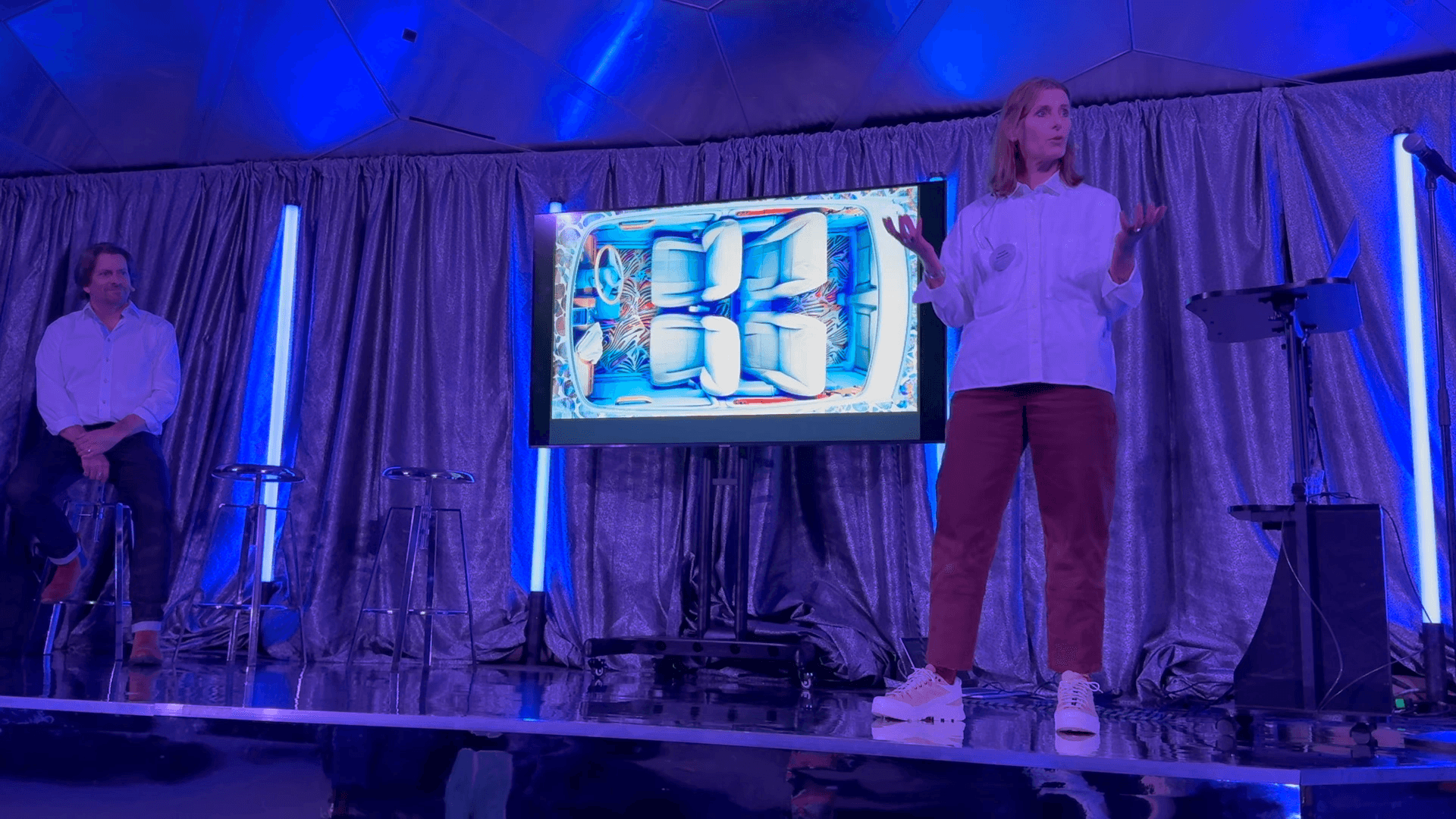
We spoke at EY's Innovation Realized conference at the Palace of Fine Arts in San Francisco on the topic of rethinking value in the age of AI.
The core argument: for the past 20-40 years, we've reduced beautiful human experiences—music, travel, connection—into manageable data. Clicks, views, time spent. It's been great for the economy, but it's stripped out the context of our lives. You can see transactions, but not the motivations behind them.
The promise of generative AI is different. These systems can absorb unstructured data—stories, conversations, documents—and potentially understand some of the context that purely transactional systems miss. We traced this through three phases: the information economy (seeking and finding), the attention economy (capturing and monetizing engagement), and what may be emerging now—intimate understanding.
We illustrated this with a story from our recent trip to New Zealand with family. The old world would see tickets and reservations. The new world is starting to see the conversations, the planning, the unexpected changes, the meaning underneath. How much it will actually understand—and what it will do with that understanding—remains open.
Helen introduced complexity science as a lens for thinking about what "context" really means. When you put four people in a car, you know each individual perfectly but have no idea what emerges from the interaction. That emergent complexity is the context that matters—and it may be the thing that disappears precisely when we try to capture it.
We ended with a provocation: Steve Jobs called the computer "a bicycle for the mind." But generative AI breaks that metaphor. These systems aren't just tools we steer—they have their own understanding, reasoning, agency. So the question becomes: can we build AI that's a mind for our minds? AI that helps us be more metacognitive, more mindful, more capable of living meaningful lives?
That's the dream worth building toward.

